This competition has been discontinuedThe Princeton University Physics Competition has posted no new edition since November 2023 and its original domain no longer resolves. This page keeps the last known format for reference only; consider F=ma / USAPhO or PhysicsBowl instead.

Physics · High school · US

Princeton University Physics CompetitionPUPC

PUPC is known for a small number of hard, fully-written problems, so it showcases modeling and explanation rather than speed, and students can enter individually without a school team. For a student who has outgrown AP Physics C but is not yet at USAPhO level it is a useful intermediate step. One caution for families: the official site has not posted a new cycle for two years, so confirm with the organizers that the current edition is running before planning around it.

Princeton University Physics Competition (PUPC)
2023-24Latest season

Photo: Sonny Vermeer / Pexels

  1. Registration opensTBA
  2. Registration deadlineNov 12023
  3. Contest datesNov 42023
  4. ResultsTBA

Dates not yet published for this season; check the official site. · physicsu.org/premier

Organizer
Physics Unlimited (non-profit run by Princeton University alumni; the competition was originally created by Princeton physics students)
Eligibility
Open worldwide to students who have not yet graduated from high school, competing individually. Physics Unlimited runs the exam through partner sites: some countries (China, Korea, Vietnam, Taiwan, Germany among them) register through local partner organizations with their own sessions, while everyone else competes in a virtual proctored session by default.
Format
An individual written exam of about four free-response problems in 1.5 hours, pitched at roughly the combined level and scope of AP Physics 1, 2 and C and reaching beyond classical mechanics. The exam has historically been held on a weekend in November. Physics Unlimited separately runs the team-based Explorer Competition (PUEC), in which teams submit a written research report on an open-ended topic rather than sitting a timed paper.
Contest dates
November 4, 2023
Awards
Gold, silver and bronze recognition certificates plus honorable mentions, with a certificate of participation for every competitor; because the contest is global, all awards are issued digitally.

About the competition

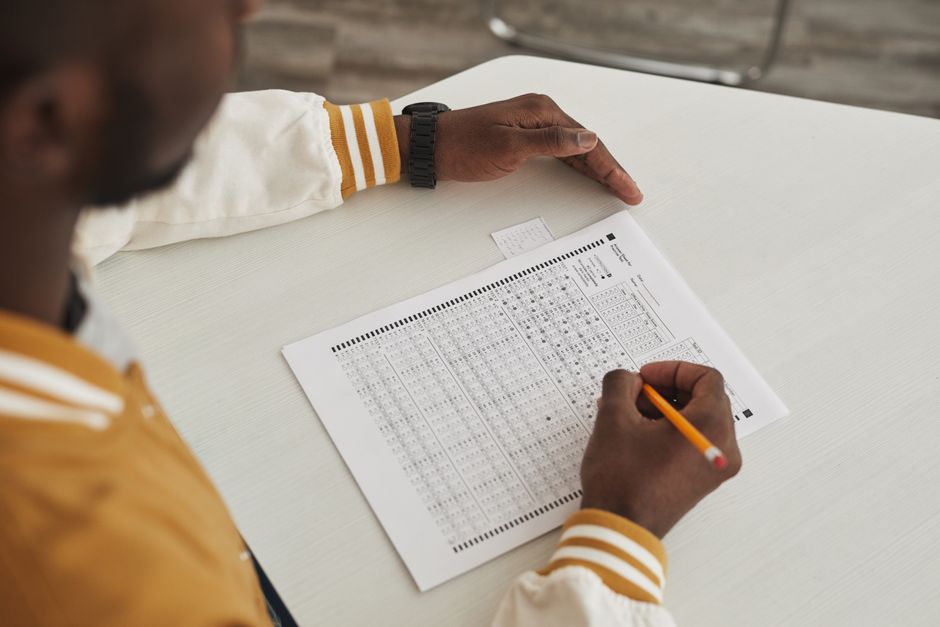
PUPC was founded by Princeton physics undergraduates and is now run by Physics Unlimited, a non-profit of Princeton alumni, under the name Physics Unlimited Premier Competition — though Chinese-speaking families still call it the Princeton physics competition. It is an individual written exam: about four extended problems in 1.5 hours, each requiring a full derivation rather than a bare answer.

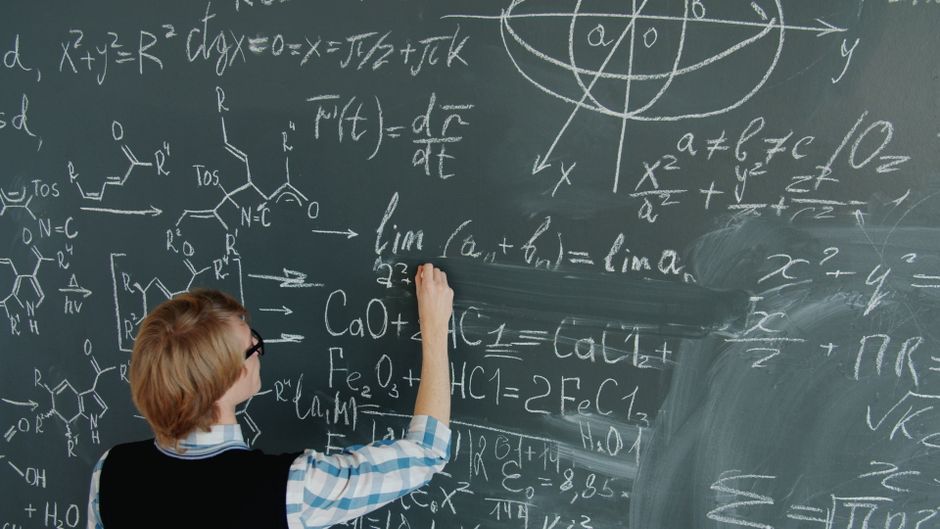
The organizers describe the scope as roughly equivalent to AP Physics 1, 2 and C, but problems typically push one level past the textbook setting, drawing on relativity, fluids, thermodynamics or astrophysics to test whether a student can deploy familiar tools in unfamiliar situations.

The exam has traditionally run on a November weekend worldwide, virtually proctored by default, with in-person sessions arranged by partner organizations in some countries. Awards are gold, silver and bronze certificates plus honorable mentions, all issued digitally. A separate team event, the Explorer Competition (PUEC), asks groups of up to six students to submit a written research report on an open-ended problem.

Important caveat: the last cycle formally posted on the official site was November 2023, so confirm the current year’s schedule with the organizers before registering.
How to prepare

  • Practice solving symbolically and write assumptions, approximations and a unit check into the answer — PUPC grades the chain of reasoning, so partial work still earns credit.
  • Past problem packets and finalist lists are on the official site; simulate full papers under time and learn the trade-off, since two complete solutions usually beat four half-finished ones.
  • Prepare one or two standard models for the topics just beyond AP Physics C — special relativity, hydrostatics, simple thermodynamic cycles, orbital mechanics — so an unfamiliar setting maps onto something known.
  • Before registering, verify that the current edition is running and who hosts it in your region; the official year pages lag, so email the organizers if in doubt.

Frequently Asked Questions

Is PUPC still running — can an Irvine student register for 2026?

As of September 2026 we found no evidence that it is. The Physics Unlimited site at physicsu.org still loads, but its copyright line stops at 2023, the most recent edition it announces is still November 4, 2023, and year pages for 2024, 2025 and 2026 were never published. The separate pupc.princeton.edu domain used for the on-campus Princeton event no longer resolves at all. Treat it as dormant for now rather than building a preparation plan around it.

Some agencies still advertise a PUPC session — is that legitimate?

Be careful. Partner organizations and study-abroad agencies in Asia have advertised sittings after 2023 — a Taiwanese co-organizer listed a November 2, 2024 date, for example — but Physics Unlimited's own site shows no corresponding year page or published results. Before paying anyone, get three things in writing: who sets and grades the paper, which organization issues the certificate, and where past results are published. If those answers do not come back clearly, do not register.

Can a student in Irvine or anywhere in the U.S. still register for PUPC?

There is no working U.S. registration route right now. Historically the default was a globally available virtual proctored session, with partner-run sittings in China, Korea, Vietnam, Taiwan and Germany. But the registration portal has not opened for a new cycle since 2023, and the Princeton on-campus site is gone. There is no legitimate way in at present, so it is better to redirect attention to F=ma, PhysicsBowl or the BPhO.

An Irvine student earned a PUPC award in an earlier year — does it still count on a college application?

Yes, and it should be listed normally. A competition going quiet does not retroactively cancel an award already earned — a gold, silver, bronze or honorable mention from 2019 through 2023 is a real result, and as long as the year is stated an admissions reader interprets it against that year's field. One practical step: download the certificate PDF, the finalist list page and the problem packets now and keep copies, because once the site goes offline there is no way to document it.

PUPC is inactive — what should an Irvine student do instead?

Three routes, depending on the goal. For the strongest credential, F=ma and USAPhO in February, entered through the school. For a low-barrier national score, PhysicsBowl in March and April. For PUPC's distinctive feel — long written derivations rather than multiple choice — the closest match is the BPhO Round 1 long questions in November, and the BAAO alongside it. Students who liked the open-ended, research-style side should look at IYPT and USIYPT instead. EDUBUS is based in Irvine and runs the physics coursework behind each of these paths, in small in-person classes or synced online.

What is the difference between PUPC and the Explorer Competition (PUEC), and are both inactive?

Premier — what people usually mean by PUPC — is a timed individual exam of about four problems in 90 minutes. Explorer, or PUEC, is a team research competition in which groups of up to six students write a report on an open-ended topic over a much longer period, closer to real research. Both are run by the same organizer, Physics Unlimited, and the site's PUEC archive also stops at 2023, so at present both programs appear to be dormant.

Are the old PUPC past papers still worth using for practice?

Yes — the archive is the most useful thing left. The site holds competition packets, solutions and finalist lists from roughly 2014 through 2022, and the house style is a small number of hard problems that must be written out in full. That is exactly the written-argument skill that AP exams and F=ma multiple choice never train, which makes these papers good bridging practice before USAPhO free response. Download them locally soon, since the site could go offline at any time.

How hard was PUPC, and did it require university-level physics?

No university physics was needed. The organizers described the scope as roughly the combined level of AP Physics 1, 2 and C, with settings pushed beyond the textbook — special relativity, hydrostatics, simple thermodynamic cycles and orbital mechanics all appeared. With only about four problems in 90 minutes, two complete solutions generally scored better than four half-finished ones. All of this describes the format through 2023, the last edition the organizers published.

Preparing for PUPC? Start with a 30-minute call

Share the grade and the goal. An Irvine-based course advisor reaches out within one business day with a first, actionable course and study plan. Direction first, courses later.

  • EDUBUS WeChat QR code, WeChat ID EDUBUSer
    Scan to reach a course advisor on WeChatHotline: (949) 383-4877WeChatEDUBUSerCopy the ID and add a course advisor in WeChat

We reply within one business day. Your details are used only for this consultation. By submitting you confirm you have read our privacy policy.