Physics · High school · INTL

International Young Physicists' Tournament (IYPT), with the U.S. qualification route

IYPT is the most research-like physics competition there is: no answer key, students design their own experiments, handle real data and defend conclusions in English before international juries. For applicants to top STEM programs who want to demonstrate research capability and teamwork, that narrative is worth far more than a single exam score. Families should note that the U.S. route differs from the Chinese or British systems — it requires a school-based team and about a year of lead time.

International Young Physicists' Tournament (IYPT), with the U.S. qualification route
2026-27Latest season

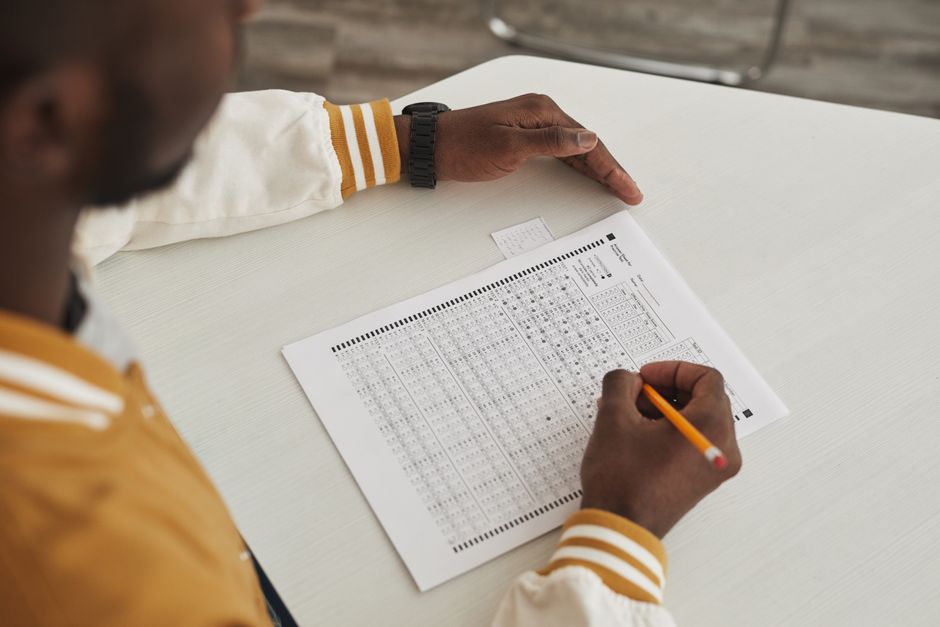
Photo: Katerina Holmes / Pexels

  1. Registration opensTBA
  2. Registration deadlineTBA
  3. Contest datesJan 30 – Jul 122027
  4. ResultsTBA

Dates not yet published for this season; check the official site. · iypt.org

Organizer
IYPT International Organizing Committee (IOC); in the United States the recognised member organisation is US IYPT, and the domestic school tournament USIYPT is run by the United States Association for Young Physicists Tournaments (USAYPT)
Eligibility
A team is three to five secondary school students and cannot be changed during the tournament; students graduating that year may compete, but anyone already enrolled at university may not. Entry is national: students must go through their country's recognised member organisation rather than registering directly. The United States is represented by US IYPT (IOC member Elia Eschenazi, recognition valid through 2029). The related domestic event, USIYPT, is run by USAYPT and requires teams of three to four students from the same high school with at least one faculty member from that school.
Format
Each year the IOC publishes 17 open-ended research problems; national teams spend most of a year experimenting, modeling and writing up solutions, then compete in Physics Fights where teams rotate through Reporter (up to twelve minutes to present), Opponent and Reviewer roles before international juries that grade depth of research, experimental design and argument rather than a correct answer. USIYPT is a smaller version: two days of six or seven preliminary rounds, four final rounds and a poster session on just four problems, with reports weighted x3 (max 30 points) and oppositions x2 (max 20), up to 150 points across preliminaries and 100 in the finals; teams may bring up to eight scouts and two coaches as observers.
Contest dates
January 30 – 31, 2027 · July 5, 2027 · July 12, 2027
Fees
IYPT entry fees are paid collectively by each country's member organization, and the official site does not publish an amount. For the 2026 cycle USAYPT published a USIYPT fee of $1,200 per team, covering three nights of lodging, local transportation and some meals, plus $150 in association dues, with additional people or additional nights charged separately; for the 2027 cycle, rely on the official site.
Awards
At IYPT, team performances are graded by international juries across the Physics Fights, with the top teams recognised in the final and medals awarded on the international standard. USIYPT awards are decided by the accumulated Physics Fight scores across preliminary and final rounds, with past winners listed on the USAYPT site.

About the competition

Often called the World Cup of physics, IYPT has run since 1988, and the 40th edition takes place in Auckland, New Zealand on 5–12 July 2027 (the 39th concluded in Zurich in August 2026).

Its format is what sets it apart: each July the IOC releases 17 open-ended problems for the following year — the 2027 set was approved on 14 July 2026 — and national teams spend most of a year designing experiments, modeling and analysing data.

There is no written exam on site; instead teams meet in successive Physics Fights, rotating through Reporter, Opponent and Reviewer roles while international juries score research depth, experimental rigour and the quality of the defence.

Teams are three to five secondary students, university enrollees are excluded, and entry must go through a country’s recognised member organisation rather than individual registration. The United States is listed with the member organisation US IYPT (IOC member Elia Eschenazi, recognition valid through 2029).

Running alongside it is USIYPT, the invitational school tournament organised by USAYPT on the last weekend of January — 30–31 January 2027 at Caltech — built on just four problems, with teams of three or four students from one school plus a faculty coach. Note that USAYPT does not describe USIYPT as a U.S. national selection event, so families should confirm directly with US IYPT or USAYPT whether and how a U.S.

team is being sent in a given year.
How to prepare

  • Pick problems and divide roles as soon as the set is released: in a year-long cycle the real bottleneck is building apparatus and collecting data, so early iteration produces stronger results.
  • Keep a lab notebook, raw data and an uncertainty analysis from day one — error sources and reproducibility are what juries probe hardest in a Physics Fight.
  • Treat the English defence as its own skill: structure the twelve-minute report as model, experiment, comparison, and rehearse answers to the ten most likely challenges.
  • In the U.S. you need a school-based team and a physics teacher willing to coach, plus budget planning (USIYPT was $1,200 per team plus $150 membership for 2026) — all best arranged a year ahead.

Frequently Asked Questions

How does an Irvine student join Team USA for IYPT?

IYPT is entered nationally, and the United States is represented by US IYPT (usiypt.net; IOC member Elia Eschenazi, recognition valid through 2029). Selection is open to individuals: a student needs a local mentor or teaching professional, then submits research slides and a video under ten minutes on one problem — 18 January 2027 for the 2027 cycle — after which finalists send an improved report and a twelve-minute presentation by 26 February, followed by interviews in spring. Five students are chosen.

What is the difference between IYPT, USIYPT and USAYPT?

The names are genuinely confusing. IYPT is the international tournament itself. USIYPT, run by USAYPT, is a domestic U.S. school invitational — two days on just four problems, with the 2027 edition at Caltech on 30 and 31 January. Separately, US IYPT at usiypt.net is the body that selects and sends Team USA to the international tournament. They are different entry points, so check which one you actually mean before registering.

Does an Irvine student need a school team for IYPT, or can they apply individually?

It depends which event. A team at the international tournament is three to five secondary school students entering through their country's recognised member organisation; students may compete in their graduating year, but anyone already enrolled at university may not. Team USA selection does accept individual applicants — students may work alone or in a group, though only one student may submit the work on a given problem. USAYPT's USIYPT is stricter: up to four students from the same school plus a faculty member, so a student without a ready-made team can start by asking a school physics teacher about putting one together.

How much does it cost an Irvine team to compete in IYPT?

The two routes differ sharply. USAYPT listed the 2026 USIYPT at $1,200 per team — covering registration, three hotel nights, local transport and some meals — plus a $150 membership, with extra attendees or nights charged separately. Going to the international tournament with Team USA costs far more: US IYPT estimates roughly $5,000 per student in the worst case, and fundraises to bring that down. Confirm current figures on the official sites before planning a budget.

When are the IYPT problems released, and how long is the prep cycle for an Irvine student?

The seventeen open-ended research problems for the next edition are published each July, which makes the preparation cycle a full school year. The IYPT 2027 problems — the 40th tournament, held in Auckland, New Zealand in July 2027 — were released on 15 July 2026, timing that suits students now in grades 10 and 11. The real bottleneck is not solving problems but building apparatus and collecting data repeatedly, which usually means planning lab time around the school's AP physics exam weeks rather than after them.

How does an IYPT Physics Fight actually work?

It is not a written exam but a structured academic debate in English. Teams rotate through three roles in each fight: the Reporter presents their research for up to twelve minutes, the Opponent challenges the methods and conclusions, and the Reviewer assesses both performances, all scored by an international jury. Juries grade depth of research, experimental design and quality of argument rather than correctness, since the problems have no set answers. Speaking and thinking on your feet in English is a real part of the score.

What lab facilities does IYPT need, and what if our school has none?

You need somewhere to run experiments repeatedly, basic apparatus, a teacher willing to coach, and from day one a lab notebook, raw data and an uncertainty analysis — error sources and reproducibility are what juries probe hardest. Many of the problems are built around everyday objects, so a school lab or even a kitchen table is a workable start. Where facilities are thin, the usual answer is to partner with the school physics lab or a local university and begin with USIYPT's four problems.

How much does IYPT help an Irvine student's college application?

What it gives you is a research narrative rather than a score: designing your own experiments, handling real data and defending conclusions in English before an international jury. For applicants to top STEM programs — especially engineering and physics majors within the UC system — that reads far more convincingly than another exam result. The scarcity is real too: Team USA takes five students a year. Even without making the national team, a USIYPT season gives a student concrete material for research-focused essays and recommendation letters.

Preparing for IYPT? Start with a 30-minute call

Share the grade and the goal. An Irvine-based course advisor reaches out within one business day with a first, actionable course and study plan. Direction first, courses later.

  • EDUBUS WeChat QR code, WeChat ID EDUBUSer
    Scan to reach a course advisor on WeChatHotline: (949) 383-4877WeChatEDUBUSerCopy the ID and add a course advisor in WeChat

We reply within one business day. Your details are used only for this consultation. By submitting you confirm you have read our privacy policy.