
Math · Middle school / High school · CA

University of Waterloo CEMC ContestsGauss / Pascal / Cayley / Fermat / Euclid

The CEMC family is valuable for two reasons: precise grade-by-grade tiering, and Euclid's full-solution questions. Each grade has its own paper, so a student can run from Gauss in grade 7 to Euclid in grade 12 with a clearly visible progression, and Euclid's written solutions train the ability to turn an idea into a mathematical argument — exactly what a diet of multiple-choice AMC papers never develops. For students applying to top Canadian engineering and mathematics programs, and to Waterloo in particular, the Euclid score is a credential that is directly weighed.

University of Waterloo CEMC Contests (Gauss / Pascal / Cayley / Fermat / Euclid)
2026-27Latest season

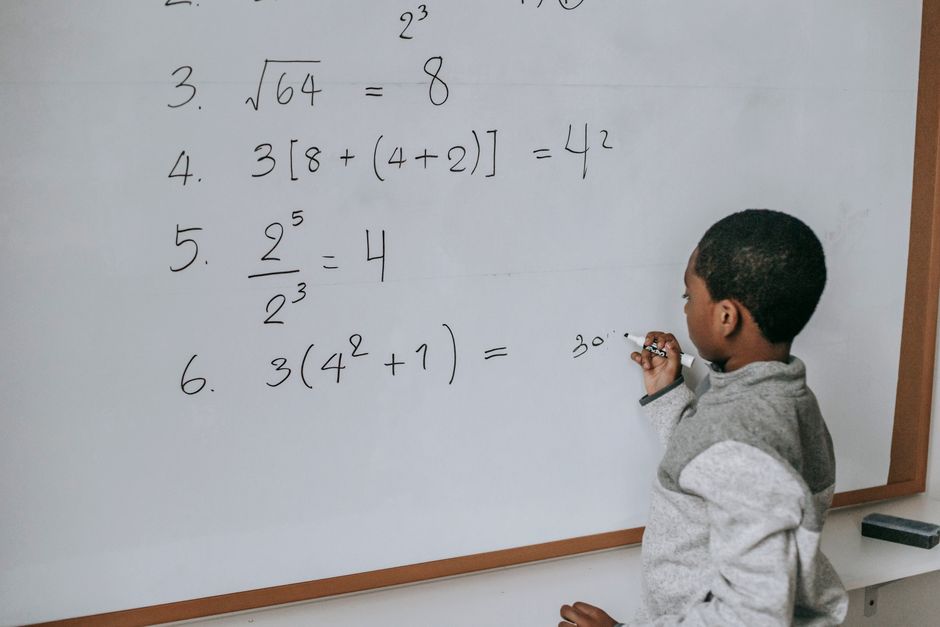
Photo: Andy Barbour / Pexels

  1. Registration opensTBA
  2. Registration deadlineFeb 22027
  3. Contest datesFeb 24 – May 102027
  4. ResultsTBA

Verified from the official site on September 20, 2026 · cemc.uwaterloo.ca/contests

Organizer
Centre for Education in Mathematics and Computing (CEMC), University of Waterloo
Eligibility
By grade: Gauss for grades 7-8, Pascal for grade 9, Cayley for grade 10, Fermat for grade 11, and Euclid for grade 12 or the final year of secondary school (including CÉGEP). Motivated students in lower grades may write a higher contest. Students cannot register themselves; their school must register — a teacher orders through the CEMC Contest Supervisor Portal using the school's CEMC School Number and supervises the writing in a classroom setting. U.S. schools are eligible and fall under the North and South America schedule.
Format
Gauss: 25 multiple-choice questions in 60 minutes, some calculators permitted, on paper or online. Pascal, Cayley, and Fermat: 25 questions in 60 minutes out of 150, with Parts A and B multiple choice (A-E) and Part C requiring whole numbers 0-99, some calculators permitted, on paper or online. Euclid: 10 questions in 2.5 hours out of 100, mixing final-answer questions with full-solution questions that earn partial credit, some calculators permitted, on paper. All five are offered in English and French.
Contest dates
February 24, 2027 · April 6, 2027 · May 10, 2027
Fees
All fees are in Canadian dollars. Per participant: Gauss CAD 5.00 (minimum order of 10 copies, or CAD 4.50 above 500 copies), Pascal / Cayley / Fermat CAD 6.00, and Euclid CAD 18.00. Each order carries an additional handling fee of CAD 5.00; shipping within Canada is CAD 5.00, and shipping outside Canada, including the United States, is 15% of the order total with a minimum of CAD 10.00. GST/HST is charged on Canadian orders only. Order deadlines differ by contest: for schools outside Canada, Pascal/Cayley/Fermat close 2027-02-02, Euclid 2027-03-11 and Gauss 2027-04-22.
Awards
Gauss: a Certificate of Participation for all; a Certificate of Distinction for the top 25% within a school (minimum four writers); and a Certificate of Outstanding Achievement for the top scorer in each grade at a school with at least ten writers. Pascal, Cayley, Fermat, and Euclid: a Certificate of Distinction for the top 25%, plus school champion medals, provincial and national rankings, and honour rolls (with a separate honour roll for schools outside North and South America). Euclid adds Canadian top-scorer plaques and cash awards of $500 for the top five and $200 for the next ten.

About the competition

The CEMC, at Canada’s University of Waterloo, runs a contest family written by more than 300,000 students from over 85 countries each year, and U.S. schools are eligible. By grade, the ladder runs Gauss (grades 7-8), Pascal (grade 9), Cayley (grade 10), Fermat (grade 11), and Euclid (grade 12). Motivated students in lower grades may write a higher contest.

For 2026-27 in North and South America: Pascal, Cayley, and Fermat are written February 23-24, 2027 (the official dates document lists Wednesday, February 24); Euclid on April 6, 2027; and Gauss within a window from May 10 to 21, scheduled by the school. Ordering deadlines differ — February 2 for Pascal/Cayley/Fermat at schools outside Canada, March 11 for Euclid, and April 22 for Gauss.

The paper structures are worth noting. Gauss is 25 multiple-choice questions in 60 minutes. Pascal, Cayley, and Fermat are also 25 questions in 60 minutes out of 150, but Part C requires a whole number from 0 to 99, which removes guessing entirely. Euclid is the outlier — 10 questions in 2.5 hours out of 100, with a substantial portion requiring full written solutions marked step by step. All five papers are offered in English and French.

Registration is where U.S. families stumble: students cannot register themselves. A teacher must order through the CEMC Contest Supervisor Portal using the school’s CEMC School Number and supervise the writing. Fees are in Canadian dollars.

How to prepare

  • Euclid's full-solution questions award partial credit, so always write out the complete argument. Submitting bare answers throws away step marks, and this is the most common way U.S. students lose points when they move to the CEMC format.
  • Part C of Pascal, Cayley, and Fermat requires a whole number from 0 to 99 with nothing to guess at. Practice that section separately — its difficulty sits close to the early AIME range.
  • Start at the paper matching your child's actual grade rather than jumping ahead. The CEMC tiering is fine-grained; earn a Certificate of Distinction (top 25%) at your own level before attempting a higher contest.
  • The CEMC site offers a complete archive of past papers with official solutions, free to download. The style is stable and repetitive across years, making it the most efficient preparation material available — no purchased question bank needed.
  • The critical first step is confirming whether the school holds a CEMC School Number. U.S. schools must order through a teacher on the Supervisor Portal, and deadlines differ by contest (Pascal/Cayley/Fermat is earliest, February 2, 2027), so ask in the fall rather than waiting for winter break.

Frequently Asked Questions

Which CEMC contest matches an Irvine child's grade?

By grade: Gauss for grades 7-8, Pascal for grade 9, Cayley for grade 10, Fermat for grade 11, and Euclid for grade 12 or the final year of secondary school. The first four are 25 questions in 60 minutes, mixing multiple choice with integer fill-in, with approved calculators allowed. Euclid is a different animal: 10 questions in 2.5 hours, several requiring fully written solutions, and a clear step up in both difficulty and character.

Can Irvine students write the Waterloo CEMC contests?

Yes. CEMC contests are open worldwide, and U.S. schools fall under the North and South America schedule, writing on the same or nearby dates as Canadian schools. American schools are equally eligible for awards such as the Certificate of Distinction. One thing to note: the cash prizes attached to the top Euclid scores are for Canadian students, while U.S. participants receive certificates and honour-roll placement.

Our Irvine school isn't signed up for CEMC — now what?

No — CEMC requires all students to participate through a school. The principal or head of mathematics submits a new school application, approval takes up to three weeks, and the school then receives a nine-digit CEMC School Number that a teacher uses to order through the Contest Supervisor Portal and supervise the writing in a classroom. If your school isn't registered, you can ask another local school or an independent test centre willing to accept your child.

Can a younger student write Fermat or Euclid ahead of their grade?

You can write up but not down — CEMC explicitly allows students to write a contest above their grade level and forbids writing below it. One restriction is easy to miss: Pascal, Cayley, and Fermat form a single group, and a student may write only one of the three in a given school year. So a grade 10 student who wants to attempt Fermat is giving up Cayley that year, which is worth weighing first.

What are the 2027 CEMC contest dates and ordering deadlines?

For the North and South America region: Pascal, Cayley, and Fermat are written February 23-24, 2027; Euclid on April 6, 2027; and Gauss within a designated window in May 2027. Ordering deadlines differ by contest and fall well before the writing date — for schools outside Canada, February 2, 2027 for Pascal/Cayley/Fermat, March 11, 2027 for Euclid, and April 22, 2027 for Gauss.

Should an Irvine student take Euclid or AMC 12?

AMC 12 is 25 multiple-choice questions in 75 minutes and tests fast recognition and problem solving. Euclid is 10 questions in 2.5 hours, several demanding full written solutions marked step by step, testing mathematical exposition and argument in a way closer to university mathematics. They do not conflict: AMC 12 maps to the U.S. admissions system, while Euclid is weighed directly in Canadian admissions. A grade 12 student considering Canadian universities should sit both.

What do the CEMC contests cost an Irvine student, and is that Canadian or U.S. dollars?

All fees are in Canadian dollars. Per writer: $5.00 for Gauss (minimum order of ten, dropping to $4.50 above 500 copies), $6.00 for Pascal, Cayley, and Fermat, and $18.00 for Euclid. Each order adds a $5.00 processing fee, and shipping for schools outside Canada, including the U.S., is 15% of the order total with a $10.00 minimum. GST/HST applies only to Canadian orders.

Does a Euclid score help with University of Waterloo admission, and do U.S. colleges recognize it?

It genuinely helps at Waterloo. Euclid is not a hard requirement for the Faculty of Mathematics, but in the most competitive programs a strong Euclid result often separates two otherwise similar applicants, and it is a meaningful input for entrance scholarships, read alongside transcripts and the AIF. U.S. universities recognize Euclid far less than AMC and AIME, so a student applying on both sides of the border should not treat Euclid as a substitute for the AMC.

Train for it with EDUBUSMath Competition Track: Elite Math Track · AMC Accelerator · AIME PathwayThis math competition path for Irvine students runs from grade 3 to high school — Elite Math Track, AMC Accelerator, AIME Pathway — in small in-person EDUBUS classes.Learn More →

Preparing for CEMC? Start with a 30-minute call

Share the grade and the goal. An Irvine-based course advisor reaches out within one business day with a first, actionable course and study plan. Direction first, courses later.

  • EDUBUS WeChat QR code, WeChat ID EDUBUSer
    Scan to reach a course advisor on WeChatHotline: (949) 383-4877WeChatEDUBUSerCopy the ID and add a course advisor in WeChat

We reply within one business day. Your details are used only for this consultation. By submitting you confirm you have read our privacy policy.