
Linguistics & Philosophy · Middle school / High school · US

North American Computational Linguistics Open (NACLO), the route to IOL

NACLO is the official US and Canadian gateway to the International Linguistics Olympiad, one of roughly twelve international science olympiads. Reaching the Invitational Round is a genuine national-level distinction for a college application, and making the US IOL team is rarer still. The contest is free and requires no prior coursework, yet it demonstrates exactly the analytical reasoning and pattern-finding that linguistics, cognitive science, computer science and AI programs look for. For Irvine families it is one of the few high-value competitions where preparation is about thinking, not credentials or expensive access.

North American Computational Linguistics Open (NACLO), the route to IOL
2026-27Latest season

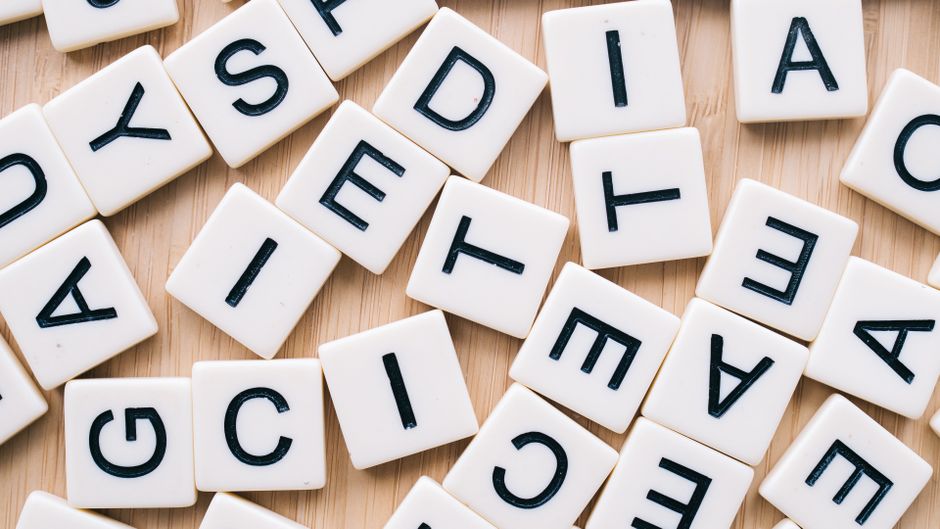
Photo: Kathy Jones / Pexels

  1. Registration opensOct 52026
  2. Registration deadlineTBA
  3. Contest datesJan 28 – Mar 182027
  4. ResultsTBA

Verified from the official site on September 20, 2026 · naclo.org

Organizer
NACLO Organizing & Program Committee (North American Computational Linguistics Open competition); IOL team selection feeds the International Linguistics Olympiad (ioling.org)
Eligibility
Open to pre-university students in the US and Canada. You must never have been enrolled as a full-time college or university student, must be under 20 on the first day of the IOL, and must be a US or Canadian citizen or enrolled in a US or Canadian secondary school. NACLO states the contest is aimed primarily at ages 13-18; students under 13 may take part with parental permission. Participation must be in person at a registered university or high school site (homeschoolers with no nearby site may request virtual proctoring). At registration each student must declare whether they are competing for the US or the Canada Anglophone IOL team, and may attempt to qualify for only one national team per year.
Format
Two written rounds, pen-and-paper only: no notes, no dictionaries, no electronic devices. The Open Round runs three hours and the Invitational Round four hours, with roughly 6-12 problems per round. Problems are self-contained linguistics puzzles - translation from unfamiliar languages, number systems, writing systems, calendars, phonological patterns, and computational problems that ask for a procedure a computer could carry out. No background in linguistics, programming or foreign languages is needed. There is no penalty for wrong answers and partial credit is given for partial reasoning. The Open Round has two start times (9:00 am Central and 9:00 am Pacific; Irvine students sit it at 9:00 am Pacific); the Invitational Round starts at 9:00 am local time in every zone except Atlantic. IOL 2027 is scheduled for July 21-28, 2027 in Bangkok, Thailand, with individual and team contests.
Contest dates
January 28, 2027 · March 18, 2027
Fees
Free. NACLO states that participation is free for all eligible students and that site hosts may not charge a fee for taking part in NACLO. For students selected for the IOL national team, NACLO works to raise funds to cover travel costs, and in recent years the United States team's costs have been covered by grants and donations including the National Science Foundation, though NACLO notes that this fundraising does not succeed every year.
Awards
High scorers in the Open Round are invited to the Invitational Round, which is used to name national winners and to publish individual results and best-solution recognition. The top four or eight US students and the top four Canada Anglophone students in the Invitational Round are selected for the national IOL teams if they meet IOL eligibility rules; up to four more high-scoring US students may be invited as a second US team. Team members take part in weekly online practices from early May to mid-July. At the IOL itself, students can earn individual gold, silver and bronze medals plus team-contest trophies - between 2007 and 2025 US teams won 97 individual medals (27 gold, the most of any country) and 14 team trophies.

About the competition

NACLO was launched in 2007 by linguistics and computational linguistics faculty at North American universities and is now the only official route for US and Canadian secondary students to the International Linguistics Olympiad. Recent years have seen well over 1,700 students competing at more than 200 registered sites.

Its defining feature is that nothing is memorized: every problem is self-contained, and a student’s job is to work out the grammar, morphology, numeral system or script of an unfamiliar language from a short data set and then apply those rules to new material.

Typical problem types include translation puzzles, numeral and base systems, writing systems, calendars, phonological patterns, and computational problems that ask for a procedure a machine could follow.

The path is straightforward: the three-hour Open Round on January 28, 2027 is open to all middle and high school students; high scorers are invited to the four-hour Invitational Round on March 18, 2027, which also decides the national teams. The top four or eight US scorers form the US IOL team, with a possible second team, train weekly online from May, and compete at IOL 2027 in Bangkok, Thailand, July 21-28.

Everything at the NACLO stage is free.

How to prepare

  • Treat the 300-plus past problems in the official Practice Problems archive as the core curriculum. Work through them by type (translation, numerals, writing systems, phonology, computational) and review the official solution for the reasoning chain, not just the final answer.
  • Practice under real conditions: strict timing (three hours Open, four hours Invitational) with pen and paper only, since no dictionaries or electronic devices are allowed. Build the habit of drawing alignment tables, listing hypotheses and eliminating them systematically.
  • Write down your reasoning, not only your answers. There is no penalty for wrong answers and partial credit is awarded for partial ideas, so never leave a problem blank if you have spotted any pattern.
  • Lock in a site as soon as registration opens in October. You can only compete in person at a registered site, so Irvine families should contact a Southern California university site early or ask a teacher or librarian to register the school as a site.

Frequently Asked Questions

Does my child need to know a foreign language to do NACLO?

No — this is the single most common misconception about NACLO. The official materials state that no background in linguistics, computer science, programming or foreign languages is required. Every problem is self-contained: students get a short sample of an unfamiliar language, work out its rules by logic, and apply them. Students with zero background regularly reach the Invitational Round in their first year.

Is NACLO free for Irvine students, and can my child take it online from home?

NACLO is free for every eligible student, and host sites are not permitted to charge a participation fee. But it is a pen-and-paper contest taken in person at a registered university or high school site — there is no general online option. Virtual proctoring is a narrow exception, mainly for homeschooled students with no site within reach.

What are the NACLO 2027 dates for an Irvine student?

Registration opens October 5, 2026. The three-hour Open Round is on January 28, 2027 — Irvine students sit it at 9:00 am Pacific — and the four-hour Invitational Round is on March 18, 2027, starting at 9:00 am local time. Both rounds are pen and paper: no dictionaries, no notes and no electronic devices of any kind.

What NACLO Open Round score gets you into the Invitational Round?

NACLO does not publish a fixed cutoff. It says only that high scorers in the Open Round are invited to the Invitational Round; invitations are limited and the effective threshold shifts each year with the field. The scoring rules help: there is no penalty for wrong answers and partial credit is given for partial reasoning, so write down any pattern you spot rather than leaving a problem blank.

How does NACLO select the US team for the IOL?

Selection is based on the Invitational Round: the top four or eight US scorers who meet IOL eligibility rules form the national team, and up to four more high scorers may be invited as a second US team. Team members train weekly online from early May to mid-July. IOL 2027 runs July 21-28, 2027 in Bangkok, Thailand, with both individual and team contests.

Where can Irvine students take NACLO?

You must sit NACLO in person at a registered site, either a university site or a high school site. The list is published on the official site each fall, and Southern California universities have hosted sites in past years. If nearby seats are tight, a teacher or librarian can apply to register your own school as a site. Lock this in as soon as registration opens in October.

Is NACLO worth doing in middle school for an Irvine student?

Yes. The Open Round is open to middle and high school students; NACLO targets ages 13-18 and younger students may take part with parental permission. In middle school the sensible goal is familiarity with the problem types and reasoning practice, not advancement. The cycle repeats every year, so a student can compete annually and aim at the Invitational Round and the national team once in high school.

How should an Irvine student prepare, and does it help with college applications?

Preparation means the official Practice Problems archive of 300-plus past problems. Work through them by type (translation, numerals, writing systems, phonology, computational), under strict timing with pen and paper only, and review the official solution for the reasoning chain rather than just the answer. The section above lists which Irvine public high school already has a linguistics club offering peer practice; a student whose school has no similar group can prepare individually with the same archive, or use EDUBUS's small-group linguistics reasoning sessions in Irvine as a supplement. On applications: reaching the Invitational Round is a genuine national distinction, and making the US IOL team is rarer still. Both read strongly for linguistics, cognitive science, CS and AI.

Train for it with EDUBUS1-on-1 Tutoring: AP, ISEE & All SubjectsOn-demand private tutoring covering twenty-plus AP subjects and full ISEE prep with an online system, popular with Irvine families for K-12 GPA support.Learn More →

Preparing for NACLO? Start with a 30-minute call

Share the grade and the goal. An Irvine-based course advisor reaches out within one business day with a first, actionable course and study plan. Direction first, courses later.

  • EDUBUS WeChat QR code, WeChat ID EDUBUSer
    Scan to reach a course advisor on WeChatHotline: (949) 383-4877WeChatEDUBUSerCopy the ID and add a course advisor in WeChat

We reply within one business day. Your details are used only for this consultation. By submitting you confirm you have read our privacy policy.