
Biology & Medicine · High school · INTL

iGEM High School Competition

iGEM is the recognized global competition in synthetic biology, and its high school teams present alongside university teams under the same judging framework — a platform with essentially no equivalent at the secondary level. For students targeting pre-med, bioengineering or computational biology, iGEM produces a real research project with a public, verifiable record: the team wiki, Registry part contributions and Jamboree presentation stay online permanently, so an admissions reader can open them directly. It is also one of the few activities that demonstrates wet-lab ability, engineering thinking, safety and ethics awareness through Human Practices, and team leadership at the same time, which makes it a strong central spike rather than a line item.

iGEM High School Competition
2026Latest season

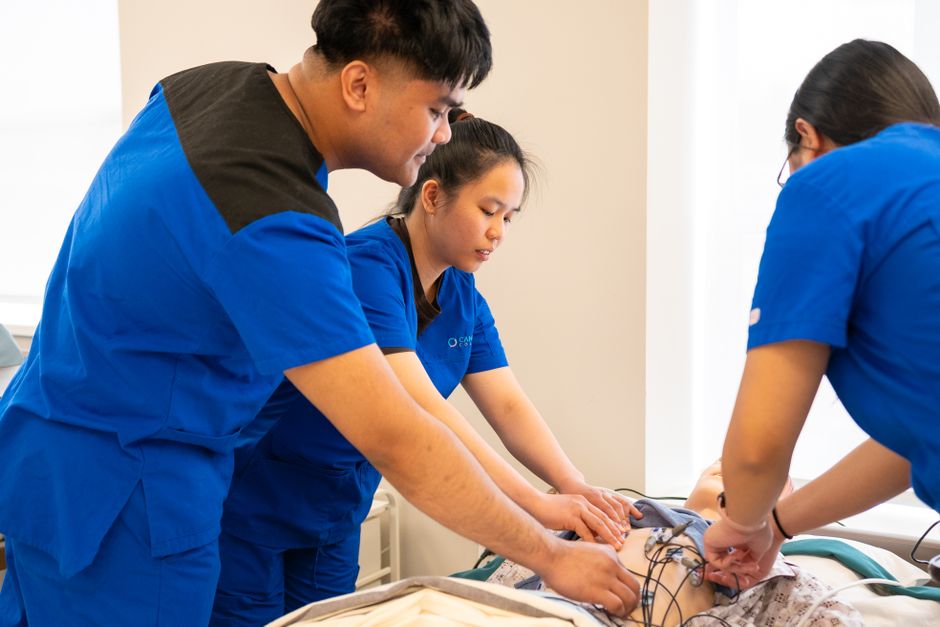
Photo: Steve A Johnson / Pexels

  1. Registration opensTBA
  2. Registration deadlineJun 42026
  3. Contest datesNov 13 – Nov 162026
  4. ResultsTBA

Verified from the official site on September 20, 2026 · competition.igem.org/high-school

Organizer
iGEM Foundation, Inc.
Eligibility
Teams are school-based and made up of students enrolled at high schools or other secondary education institutions; iGEM runs a separate High School Competition and Collegiate Competition. Every team must be formally affiliated with at least one institution and must have a Primary PI who registers the team and serves as the point of contact with iGEM HQ. For secondary education teams the Primary PI must be a principal, teacher or academic coach employed by a school where team members are enrolled — students may not submit the application on the PI's behalf. The team roster freezes on the published deadline (16 September in the 2026 season).
Format
A year-long team research project rather than an exam. Teams register in the spring, choose their own problem, and design and test a synthetic biology project; high school projects must use only organisms and components on iGEM's current White List. Across the season teams submit a sequence of deliverables on the official calendar: Village and project information, safety forms (Check-in, Animal Use, and the final Project Safety Form), a project promotion video, a team wiki, the Judging Form, the Attributions Form, contributions to the iGEM Registry, software source code, and a presentation video. The Wiki Freeze is the heaviest deadline of the year. High school teams select their own Village and exhibit alongside collegiate teams at the Grand Jamboree, where they meet judges in dedicated judging sessions.
Contest dates
November 13 – 16, 2026
Fees
From the 2026 season all iGEM fees are charged in euros. Program Fee - Stage I (registration, charged per team): Early €4,950 by 12 February; Regular €5,450 by 2 April; Late €5,950 by 4 June. Program Fee - Stage II (final submission and judging eligibility, charged per team): €2,750 by 30 July. Stage III applies only to teams attending in person: the Team Member Ticket is charged per person at €525 early by 7 May, €575 regular by 30 July and €645 late by 16 November. All payment deadlines are 15:00 UTC, and the same rates apply to the Collegiate and High School divisions.
Awards
Only teams that complete Stage II and submit the Judging Form on time are eligible for evaluation. Awards include gold, silver and bronze medals earned against published criteria rather than by ranking, Village-level nominations and prizes, and special prizes such as Best Software Tool. Winners are announced at the live award show during the Grand Jamboree, and all finishing teams receive official certificates.

About the competition

iGEM, the International Genetically Engineered Machine competition run by the iGEM Foundation, is the most influential student competition in synthetic biology; the 2025 season drew more than 400 teams and over 10,000 participants from 40-plus countries.

It runs separate Collegiate and High School competitions under one set of deliverables and one judging framework, and high school teams choose their own Village and exhibit alongside university teams at the Grand Jamboree.

The season follows the calendar year: registration and the Stage I program fee run from January to early June while teams settle on a topic and assemble their PI and mentor support; summer is the main experimental and modeling period, with the Stage II finalization fee due by late July to secure judging eligibility; September and October bring a dense run of deliverables including safety forms, the roster freeze, the Wiki Freeze, the Judging Form, Attributions, Registry contributions and the presentation video; the Grand Jamboree in Paris follows in November with judging sessions, Village booths and the award show.

High school projects are restricted to organisms and components on the official White List, and the Primary PI must be a teacher, academic coach or principal at a team member’s school. The real difficulty is project management across a nearly year-long timeline with immovable deadlines, and the fees are substantial.

How to prepare

  • The season really begins the previous autumn: secure a teacher willing to serve as Primary PI and confirm lab access before settling on a topic — most failed teams stall on these two things.
  • Check the iGEM White List before choosing a project; high school teams must stay within the listed organisms and components, and a failed safety check-in late in the season can invalidate the whole project.
  • Treat the wiki as a year-long document rather than an October sprint: record protocols, photos and data from the first experiment, and leave only layout and editing for the two weeks before the Wiki Freeze.
  • Human Practices is core to judging, not a bonus. Schedule interviews with domain professionals, patient communities or regulators early, and document exactly how that input changed the project design.
  • Plan budget and registration timing together — the gap between the early and late Stage I rate is €1,000, so aim to register and pay before the February deadline and line up school or sponsor funding in advance.

Frequently Asked Questions

What does a year of iGEM cost an Irvine high school team?

Budget in the tens of thousands. From the 2026 season iGEM charges in euros: Stage I registration is €4,950-5,950 per team depending on how early you sign up, Stage II — which buys the right to be judged — adds €2,750, and each member attending in person needs a Jamboree ticket at €525-645. None of that covers reagents, strains, consumables, or flights and hotels in Europe. High school teams pay the same rates as university teams.

How does an Irvine high schooler start an iGEM team?

Every team affiliates with an institution and registers through a Primary PI. For the High School Competition, that PI must be a principal, teacher or academic coach employed by a school the members attend — students cannot submit the application themselves. There is no hard cap on team size, but iGEM recommends 8-15 students as manageable. Some Irvine Unified School District (IUSD) high schools already run an iGEM club; students at schools without one need to find a willing PI first and finish the full roster before the season's freeze.

Can an Irvine student do iGEM without a school lab?

Yes, with adjustments. iGEM recognises community lab teams, where the lab's director serves as Primary PI, and many teams negotiate bench space at a nearby university or biotech company. Another route is to pick a modelling, software or AI-oriented Village and run a dry-lab project. Only some Irvine Unified School District high schools currently have an iGEM club, so students without one can start from these workarounds while looking for a faculty PI early.

How is the iGEM High School Competition different from the collegiate one?

They are separate competitions judged separately, but the fee schedule is identical and both present at the same Grand Jamboree. The biggest practical difference is safety: high school teams may only work with organisms and parts on iGEM's current White List of well-characterised low-risk organisms, and anything else requires advance approval via a Check-In Form. Otherwise the workflow — choosing a Village, the wiki, the Judging Form, live judging sessions — matches the collegiate track.

Is it too late to register for iGEM this year?

For the 2026 season, yes — registration closed on 4 June 2026 and that season is now heading into its November Grand Jamboree. New teams should target the next season. iGEM normally opens registration early in the calendar year with early, regular and late tiers, and the gap between early and late is over a thousand euros, so signing up early matters. Watch the Registration and Calendar pages at competition.igem.org.

Do iGEM high school teams have to travel to the Jamboree?

No. Any team that completes Stage I and Stage II is eligible for judging, and remote teams and remote members can still take part in online judging sessions and livestreams. Stage III Jamboree tickets are charged per person and only apply to those attending in person. However, to secure a booth and eligibility for a Live Stage Talk, the team must complete its Stage II payment and buy at least one Jamboree ticket before the Stage II deadline.

How are iGEM gold, silver and bronze medals decided?

Medals are criteria-based, not ranked. iGEM publishes a checklist of medal criteria for bronze, silver and gold, and any team that meets them earns that medal — there is no quota, so in principle every team could win gold. The prerequisites are completing the Stage II payment and submitting the Judging Form on time. The genuinely competitive awards are the Village best-project nominations and special prizes such as Best Software Tool.

Is the time iGEM takes worth it for an Irvine student's college applications?

It is a year-long commitment: pick a project after spring registration, run experiments through the summer, then deliver a stack of required items in the autumn — the wiki, safety forms, a project video, the Judging Form — with the Wiki Freeze as the heaviest deadline of the season. Its admissions value comes from demonstrable ownership of a real project and teamwork, not from the medal, and that kind of research experience is generally read as direct evidence of research capability in University of California applications. A student who is only a name on the roster gets little for a large sum of money.

Train for it with EDUBUS1-on-1 Tutoring: AP, ISEE & All SubjectsOn-demand private tutoring covering twenty-plus AP subjects and full ISEE prep with an online system, popular with Irvine families for K-12 GPA support.Learn More →

Preparing for iGEM? Start with a 30-minute call

Share the grade and the goal. An Irvine-based course advisor reaches out within one business day with a first, actionable course and study plan. Direction first, courses later.

  • EDUBUS WeChat QR code, WeChat ID EDUBUSer
    Scan to reach a course advisor on WeChatHotline: (949) 383-4877WeChatEDUBUSerCopy the ID and add a course advisor in WeChat

We reply within one business day. Your details are used only for this consultation. By submitting you confirm you have read our privacy policy.