

In short: The Massachusetts Institute of Technology in Cambridge, Massachusetts, founded in 1861, enrolls 4,561 undergraduates. The Class of 2029 admit rate was 4.6%, the SAT or ACT is required, and families earning under $200,000 typically pay no tuition.
- Location
- 77 Massachusetts Avenue, Cambridge, MA 02139
- Founded
- 1861
- Acceptance Rate
- 4.6% (Class of 2029: 29,281 applied, 1,334 admitted)
- Official Website
- www.mit.edu
Application timelineper school website
- Early Action application, fee, recommendations, and school reportDeadline
- EA applicants complete the SAT or ACT and submit financial aid materialsDeadline
- EA decisions (admit, defer, or deny)
- Regular Action applicationDeadline
- Midyear grades submitted through the FUN Form
- RA financial aid materialsDeadline
- RA decisions
- Admitted students replyDeadline
Overview
The Massachusetts Institute of Technology (MIT) sits in Cambridge, Massachusetts. It was founded in Boston in 1861 and moved to its Cambridge campus in 1916. In fall 2025 MIT enrolled 11,816 students, 4,561 of them undergraduates. MIT reports a 3:1 ratio of undergraduates to faculty and instructional staff, and the six-year graduation rate for the cohort that entered in 2019 was 96%. The 1,155 first-year students in the Class of 2029 come from 49 states and 56 countries, and California is the most represented state.
Two kinds of families tend to fit. In the first, the student has a sustained interest in mathematics, science, or engineering and has already built something, whether a project, research, or competition work, so that course depth and activities point the same way. In the second, the student’s academic record is exceptional but family income is limited, because MIT is need-blind for every applicant and families earning under $200,000 typically pay no tuition. MIT lists collaboration, initiative, risk taking, and hands-on creativity among the qualities it looks for, and each of these has to be shown through specific experiences in the application. For Irvine families, MIT Early Action is non-binding and runs alongside the University of California application; the last section of this page lays out the timing by grade.
Admissions data
MIT publishes applicant, admit, and enrollment counts by class, along with test score ranges for admitted students.
- Mid-Atlantic20%
- West Coast, Alaska & Hawaii17%
- South & Puerto Rico15%
- Southwest & Mountain13%
- New England12%
- Abroad11%
- Midwest & Plains10%
West Coast includes California; other US territories are under 1%.
- Public school68%
- Independent school15%
- Foreign school9%
- Religious school8%
- Home school1%
- Other1%
In Early Action, 12,052 students applied and 721 were admitted; 7,486 were deferred to Regular Action, and 175 of those were later admitted. MIT offered 561 applicants a place on the waitlist and admitted 10 from it. Among enrolling students, 45% attend tuition-free, 27% are Pell Grant eligible, and 20% are the first in their family to attend college. MIT did not publish intended fields of study for this class.
How to apply
MIT has two application cycles, and it states plainly that the only difference is the deadline: it has no preference between them and there is no strategic benefit to either. Each applicant may apply only once per entry year, in one cycle.
Early Action
EA- Deadline
- November 1
- Decisions
- Mid-December
- Non-binding, with no limits on applying elsewhere; admitted students are not required to attend
- Outcomes are admit, defer to Regular Action, or deny; students denied in EA cannot reapply in RA
- Finish the SAT or ACT by November 30
- Financial aid materials due November 30
Regular Action
RA- Deadline
- January 4
- Decisions
- Mid-March
- Finish the SAT or ACT by December 31; English proficiency tests accepted through January dates
- Financial aid materials due February 15
- Midyear grades submitted in mid-February through the FUN Form
- Admitted students reply by May 1
MIT does not use the Common Application; students apply through the MIT application portal. The fee is $75, with waivers available. For the 2026-27 cycle the materials include four short essays of roughly 100 to 200 words each, four short responses of 40 to 50 words each, an activities form with room for four entries, a self-reported coursework form for students in US schools, the Secondary School Report (SSR) and transcript from the counselor, and two teacher recommendations. MIT recommends one letter from a math or science teacher and one from a humanities, social science, or language teacher, though the combination is not a hard requirement. Students with significant work in research, the performing arts, the visual arts, or making may submit an optional creative portfolio through SlideRoom.
Testing is required. MIT’s wording is “We require the SAT or ACT,” and it does not require the ACT writing or science sections or the SAT essay; both the paper and digital SAT are accepted. Scores are self-reported on the application and verified at enrollment, and when a student sits for the same test more than once, MIT primarily considers the highest score in each section. There are no cutoff or recommended SAT or ACT scores. For non-native English speakers who have used English for fewer than five years, MIT strongly recommends an English proficiency exam such as the TOEFL, IELTS, or Duolingo English Test.
Interviews are run by the MIT Educational Council, a network of more than 3,500 graduates who volunteer to meet applicants in their home area. After an application is submitted, an interviewer reaches out by email if one is available; if no interview can be arranged, it is waived and the application is not adversely affected. MIT is need-blind for domestic and international applicants alike, meaning an aid application never affects the admission decision, and it meets 100% of demonstrated need. MIT applies no school, state, or regional quotas and does not consider legacy status.
Cost and financial aid
MIT has published its 2026-27 cost of attendance. The chart shows the four charges MIT bills directly and the aid standard by family income.
- Tuition$66,720
- Student life fee$420
- Housing$14,090
- Food$8,104
What a family actually pays, by income
- Under $100,000$0Parent contribution is zero
- $100,000 to $200,000Tuition $0Aid typically covers at least full tuition
- Above $200,000Assessed on family income and assets
MIT announced the under-$200,000 tuition-free standard on November 20, 2024, and it took effect with the 2025-26 academic year. For families under $100,000, parents pay nothing, though students still contribute through summer savings and term-time work. Aid is allocated exclusively on demonstrated need. MIT’s 2025-26 estimates put the median net price for aided families at $19,734 in the $100,000 to $200,000 band and $49,083 above $200,000. In 2024-25, 57% of undergraduates received an MIT Scholarship, and 88% of students graduate with no student loan debt.
Schools and fields of study
MIT is organized into five schools and one cross-cutting college: the School of Architecture and Planning, the School of Engineering, the School of Humanities, Arts, and Social Sciences, the MIT Sloan School of Management, the School of Science, and the MIT Schwarzman College of Computing, which has education and research links across all five schools. MIT refers to departments by number; Electrical Engineering and Computer Science is Course 6 and Mathematics is Course 18. MIT counts 56 undergraduate majors and 62 minors; the map below groups the names in the MIT Facts list of majors by area.
17fieldsEngineering and computingShow all
- Aerospace Engineering
- Artificial Intelligence and Decision Making
- Biological Engineering
- Chemical Engineering
- Chemical-Biological Engineering
- Civil and Environmental Engineering
- Climate System Science and Engineering
- Computer Science and Engineering
- Computer Science and Molecular Biology
- Computer Science, Economics, and Data Science
- Electrical Engineering with Computing
- Computation and Cognition
- Materials Science and Engineering
- Archaeology and Materials
- Mechanical Engineering
- Mechanical and Ocean Engineering
- Nuclear Science and Engineering
8fieldsScience and mathematicsShow all
- Mathematics (General, Applied, or Pure)
- Mathematics with Computer Science
- Physics
- Chemistry
- Chemistry and Biology
- Biology
- Brain and Cognitive Sciences
- Earth, Atmospheric and Planetary Sciences
10fieldsEconomics, management, architecture, and planningShow all
- Economics
- Mathematical Economics
- Management
- Business Analytics
- Finance
- Architecture
- Art and Design
- Planning
- Urban Science and Planning with Computer Science
- Political Science
20fieldsHumanities, arts, and social sciencesShow all
- African and African Diaspora Studies
- American Studies
- Ancient and Medieval Studies
- Anthropology
- Asian and Asian Diaspora Studies
- Comparative Media Studies
- Global Studies and Languages (French, German, or Spanish)
- History
- Humanities and Engineering
- Humanities and Science
- Latin American and Latino/a Studies
- Linguistics and Philosophy
- Literature
- Music
- Philosophy
- Russian and Eurasian Studies
- Science, Technology, and Society
- Theater Arts
- Women’s and Gender Studies
- Writing
There is no admission by school at the undergraduate level. Every first-year student enters MIT as a whole, joins a department at the start of sophomore year, and may defer that choice until the end of sophomore year. In 2025-26, excluding first-year students, the School of Engineering had 2,451 majors, 1,483 of them in programs shared with the College of Computing; the School of Science had 691, Sloan 136, Humanities, Arts, and Social Sciences 65, and Architecture and Planning 53.
Every student completes the General Institute Requirements, which cover mathematics, the physical, natural, and social sciences, and the humanities and arts, along with a communication requirement that runs through all four years. The first semester is graded pass/no record, giving new students time to adjust before letter grades begin. Nearly 65% of undergraduates take part in the Undergraduate Research Opportunities Program (UROP) each year, and 93% of 2025 graduating seniors reported completing a UROP. Each January, the four-week Independent Activities Period (IAP) lets students set their own agenda of short courses, projects, or internships.
Campus life
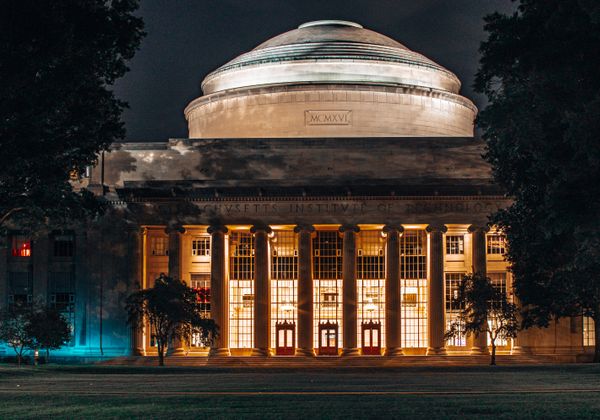


MIT requires all first-year students to live on campus for their entire first year. Undergraduates live in 11 on-campus houses, each with a live-in house team usually led by a senior faculty member. On-campus housing is guaranteed for four consecutive years, and more than 3,500 undergraduates currently live on campus. After the first year, students may also move into a fraternity, sorority, or independent living group (FSILG); about 900 students lived in one in 2025-26.
A timeline for Irvine families
The five Irvine Unified high schools differ in when AP courses open, how weighting works, and how the math sequence accelerates, and those four years of scheduling shape the depth of an application. School-by-school rules are in the IUSD high school guides.
- Grade 9Set the math path
- Settle the math acceleration path and science sequence
- Protect core grades
- Choose one or two academic or hands-on directions that can run four years
- Grade 10First AP courses
- Take the first AP courses the school allows
- Turn activities into a visible project or result
- Consider a research program or academic summer program
- Grade 11Finish testing
- SAT or ACT: first sitting in spring, second before summer ends
- Choose one math or science teacher and one humanities teacher to recommend
- Collect research or work that could go into a portfolio
- Fall of grade 12Choose EA or RA
- EA: application by November 1; testing and aid materials by November 30
- File the UC application in the same window
- RA: application by January 4
Dates and registration deadlines are on the 2026-27 test calendar, and preparation options are on the SAT page.
How EDUBUS helps
EDUBUS college planning runs year by year from grade 9: a four-year course plan built around the rules and math acceleration paths of each Irvine high school, a testing schedule, a clear direction for research, competitions, and projects, and in grade 12 a counselor review of MIT’s essays, short responses, and activities form. Preparing the CSS Profile and FAFSA for financial aid is part of the service. To see where a student stands relative to schools like MIT, start with a free assessment.
Frequently Asked Questions
Do Irvine high school students need the SAT or ACT for MIT?
Yes. MIT requires the SAT or ACT from all first-year applicants; the ACT writing and science sections and the SAT essay are not required. Early Action applicants must test by November 30 and Regular Action applicants by December 31. Scores are self-reported on the application and verified at enrollment, and MIT primarily considers the highest score in each section across sittings.
Can I apply Early Action to MIT and still apply to the University of California?
Yes. MIT Early Action is non-binding and places no limits on where else a student applies. The UC system has no early round, so an Irvine family can submit MIT EA on November 1 and the UC application in the same season. If a student also applies early to a school with its own restrictions, MIT requires that those rules be respected.
At what family income is MIT tuition-free?
Beginning in 2025-26, students from families earning under $200,000 typically attend tuition-free, and for families under $100,000 the parent contribution is zero; students still contribute modestly through summer savings and term-time work. MIT is need-blind and meets full demonstrated need for all undergraduates, domestic and international.
Is an MIT interview required, and how does it work for Irvine applicants?
No. After an application is submitted, a member of the MIT Educational Council, a network of more than 3,500 graduates, may reach out to arrange an interview in the applicant's home area; most EA interviews happen in November and most RA interviews in January. If no interview can be offered, it is waived and the application is not affected.
What was the admit rate for the MIT Class of 2029?
4.6%. MIT received 29,281 applications and admitted 1,334 students; 1,155 enrolled. In Early Action, 12,052 applied and 721 were admitted, and among international applicants 6,926 applied and 136 were admitted.
When should a student in Irvine start preparing for an MIT application?
EDUBUS recommends starting in grade 9. Admitted students' math scores are very high, and the math acceleration path at each Irvine Unified high school determines whether a student reaches calculus and beyond by grade 11, so that choice belongs in grade 9. Testing should be done in grade 11, and the choice between EA and RA comes in the fall of grade 12.
Sources
Pages checked (22)
- mitadmissions.org/apply/firstyear/deadlines-requirements/
- mitadmissions.org/apply/firstyear/early-vs-regular/
- mitadmissions.org/apply/firstyear/tests-scores/
- mitadmissions.org/apply/firstyear/letters-of-recommendation/
- mitadmissions.org/apply/firstyear/essays-activities-academics/
- mitadmissions.org/apply/firstyear/interview/
- mitadmissions.org/apply/firstyear/international/
- mitadmissions.org/apply/process/stats/
- mitadmissions.org/apply/process/profile/
- sfs.mit.edu/undergraduate-students/the-cost-of-attendance/coa/
- sfs.mit.edu/undergraduate-students/the-cost-of-attendance/making-mit-affordable/
- news.mit.edu/2024/mit-tuition-undergraduates-family-income-1120
- facts.mit.edu/
- facts.mit.edu/undergraduate-admissions/
- facts.mit.edu/undergraduate-students/
- facts.mit.edu/enrollment-statistics/
- facts.mit.edu/degrees-majors/
- facts.mit.edu/schools-college/
- www.mit.edu/education/
- ir.mit.edu/projects/2025-26-common-data-set/
- studentlife.mit.edu/living-communities/
- www.usnews.com/best-colleges/rankings/national-universities