
Math · High school · US

Princeton University Mathematics CompetitionPUMaC

PUMaC's distinguishing features are its subject-specific individual tests and its proof-based Power Round: students choose the subjects they are strongest in and must actually write proofs, which is far closer to university mathematics than multiple choice. For Irvine students already at AIME level, a Division A placement is a genuinely differentiating credential, while Division B gives a newer school team a stage where it will not simply be flattened.

Princeton University Mathematics Competition (PUMaC)
2026-27Latest season

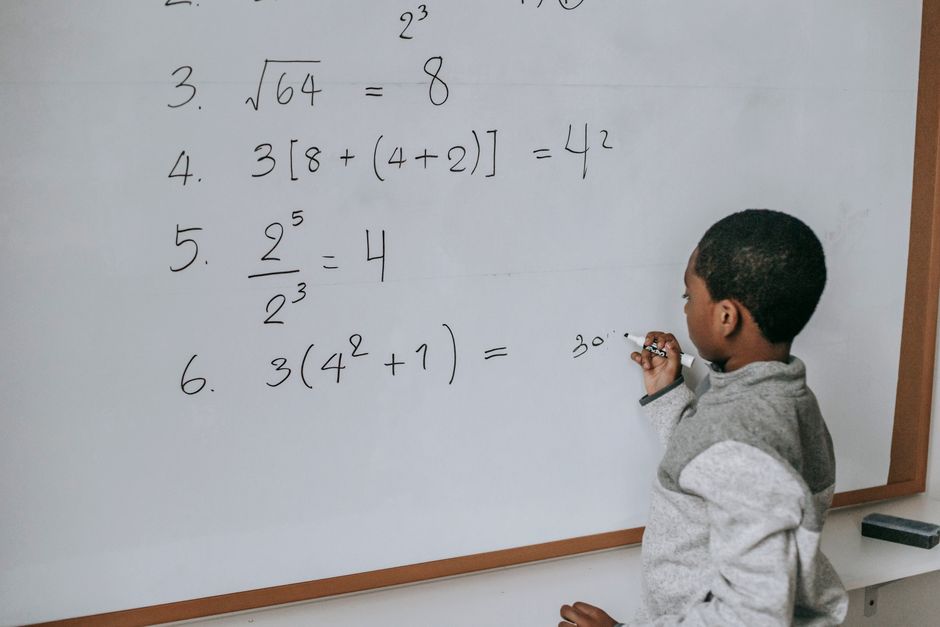
Photo: Yan Krukau / Pexels

  1. Registration opensSep 122026
  2. Registration deadlineOct 112026
  3. Contest datesNov 212026
  4. ResultsTBA

Verified from the official site on September 20, 2026 · pumac.princeton.edu

Organizer
Students at Princeton University (the Princeton University Mathematics Competition organizing committee)
Eligibility
Students must not have reached their 20th birthday before the competition date and must not have been enrolled full-time at a post-secondary institution before then. Teams normally come from a single high school; regional or homeschool teams require director approval and must come from a well-defined geographic area. Individual entries are accepted for the Main Competition. A full team is eight students.
Format
Two divisions: A for experienced teams and B for newer ones, differing only in individual-test difficulty; the Power and Team Rounds are identical. Rounds are: a proof-based Power Round released online about a week in advance and worked on collaboratively over roughly a week; individual tests in which each student picks two of four subjects (Algebra, Combinatorics, Geometry, Number Theory), 8 problems in 60 minutes each; a collaborative short-answer Team Test of about 30 minutes; and Individual Finals for the top 10 per subject per division — three proof problems in 90 minutes. Individual standing is 25% + 25% from the two tests and 50% from the Finals.
Contest dates
November 21, 2026
Fees
The official Registration Info page lists the main competition at $15 per student, which is $120 for a team of 8 and $15 for an individual competitor; the FAQ page on the same site still shows the older prices of $12.50 per student and $100 per team, with the Power Round alone at $5 per student and $40 per team. The two pages disagree, so rely on the Registration Info page and confirm with the organizing committee before registering. Payment is accepted by credit card or check.
Awards
Trophies, medals, and cash certificates from sponsors are presented at the awards ceremony. Individual and team standings are ranked separately in Division A and Division B, with additional placements from the per-subject Individual Finals.

About the competition

PUMaC is organized by Princeton University students and held on a single day each November on the Princeton campus. The 2026 competition falls on Saturday, November 21. Registration opened September 12 and closes, on a rolling basis, at 11:59 p.m. ET on October 11, 2026.

Unlike most competitions, PUMaC builds subject choice into the format: each student picks two of Algebra, Combinatorics, Geometry, and Number Theory and takes an 8-problem, 60-minute test in each, so students with a sharp specialty can play to it. The top ten per subject per division advance to the Individual Finals — three proof problems in 90 minutes — which counts for half of the individual standing and is where rankings really separate. Two team components complete the day: a proof-based Power Round released about a week beforehand and worked on collaboratively, and a 30-minute Team Test on site.

The division structure welcomes new teams. Division A is for experienced squads and Division B for newer ones; the Power and Team Rounds are identical and only the individual tests differ. Multi-school teams normally must compete in Division A.

For California families the constraint is travel: there is no online edition and no satellite site. PUMaC does keep a remote Power Competition for teams that cannot attend, but a team may enter only one of the two. Note also that two official pages quote different fees; treat Registration Info as current.

How to prepare

  • Since you choose two of the four subjects, test yourself on past papers in all four beforehand and pick by measured score rather than by feel.
  • The Individual Finals are proof-based and worth half the individual standing. Placing requires practicing written proofs in advance — being able to compute an answer is worth nothing in that round.
  • The Power Round runs about a week with collaboration allowed, so manage it like a small project: assign sections, set an internal deadline, and leave time to unify the writing and hunt for logical gaps.
  • A newly formed school team should enter Division B. The team rounds are identical across divisions and only the individual tests differ, so placing in B beats finishing last in A.
  • Handle registration and travel together. The deadline is in mid-October and Princeton is in New Jersey, so California teams should lock in flights and lodging as soon as acceptance is confirmed.

Frequently Asked Questions

What should an Irvine team know about combining schools for PUMaC?

A full team is eight students. PUMaC states that teams need not come from a single high school — regional and homeschool teams are allowed — but they must represent a well-defined geographic region. One catch matters a lot for Irvine families assembling an ad-hoc squad: multi-school teams are normally required to compete in Division A, the experienced division, unless the organizers grant an exception. Confirm your division with them before you register.

Our Irvine school has no team — can a student enter PUMaC alone?

Yes. PUMaC stopped accepting half-team applications in 2017 but still takes individual entrants for the Main Competition at the same $15 per-student fee. Two procedural points matter. First, an adult must create a coach account to be responsible for the student. Second, individual registration runs in two phases: in the first, students whose school has an active team application may not apply; the second opens only to students whose school's teams were all rejected.

How should a team pick between PUMaC Division A and Division B?

Division B is for newer or less experienced teams; Division A is for established ones. The Power Round and Team Round are identical across divisions — only the individual subject tests differ in difficulty. A new school team should start in B, since placing in Division B says more than finishing last in Division A. Bear in mind, though, that teams assembled across multiple schools are usually placed in Division A, so factor that in when forming the roster.

Can an Irvine student join PUMaC without traveling to Princeton?

Yes. PUMaC runs a Power Competition for teams that cannot attend: you complete only the proof-based Power Round remotely, and the remaining problems are posted after the event. A team registers for either the Main Competition or the Power Competition, never both. For a California team, it is a low-cost way to sample PUMaC's proof-writing style without flying to New Jersey, then decide about attending in person the following year.

What is the PUMaC registration fee and deadline for an Irvine team?

Two official pages disagree, so check carefully. The newer Registration Info page lists $15 per student — $120 for an eight-person team and $15 for an individual entrant — while the FAQ page still shows older, lower prices. Go with Registration Info and email the organizers to confirm before paying. Registration typically opens in September and closes in mid-October, decisions are made on a rolling basis so early applicants hear sooner, and financial hardship requests are considered.

Can students choose their subjects on the PUMaC individual tests?

Yes, and that is one of PUMaC's distinctive features. Each student picks two of algebra, combinatorics, geometry, and number theory, with eight problems in sixty minutes per subject. Watch the scoring, though: the top ten in each subject and division advance to Individual Finals, and those finals count for fifty percent of the individual score — three proof-based problems in ninety minutes. A student who can compute answers but not write proofs will not place highly.

What is the PUMaC Power Round and how far ahead does it start?

The Power Round is a proof-based team round released online roughly a week before the tournament; the whole team may collaborate on it across that week and submit before competition day. It is nothing like a timed exam — it behaves more like a small research project. Divide up the reading, agree on notation, set an internal deadline, and leave time to unify the write-up and hunt for logical gaps. Do not start it the night before it is due.

Does an Irvine parent need to travel with the team to PUMaC?

Each team must be accompanied by one adult, and individual entrants need a coach-account holder responsible for them in an emergency — a parent can fill either role. The competition is held in person on the Princeton campus in New Jersey, usually on a Saturday in late November, and other family members may attend although lunch is not guaranteed for them. California families should book flights and lodging as soon as acceptance is confirmed; the mid-October deadline leaves little margin.

Train for it with EDUBUSMath Competition Track: Elite Math Track · AMC Accelerator · AIME PathwayThis math competition path for Irvine students runs from grade 3 to high school — Elite Math Track, AMC Accelerator, AIME Pathway — in small in-person EDUBUS classes.Learn More →

Preparing for PUMaC? Start with a 30-minute call

Share the grade and the goal. An Irvine-based course advisor reaches out within one business day with a first, actionable course and study plan. Direction first, courses later.

  • EDUBUS WeChat QR code, WeChat ID EDUBUSer
    Scan to reach a course advisor on WeChatHotline: (949) 383-4877WeChatEDUBUSerCopy the ID and add a course advisor in WeChat

We reply within one business day. Your details are used only for this consultation. By submitting you confirm you have read our privacy policy.