
Math · High school / Middle school · US

High School Mathematical Contest in ModelingHiMCM

HiMCM is a fundamentally different animal from the AMC family: it does not test speed but the ability to decompose an open real-world problem into a model, support conclusions with data, and write a persuasive English paper. That maps directly onto the research potential U.S. universities look for, and the paper is a tangible artifact a student can cite on an application and explain in an interview. For students with strong logic and writing who do not thrive under a stopwatch, HiMCM is often a better fit than the AMC track.

High School Mathematical Contest in Modeling (HiMCM)
2026-27Latest season

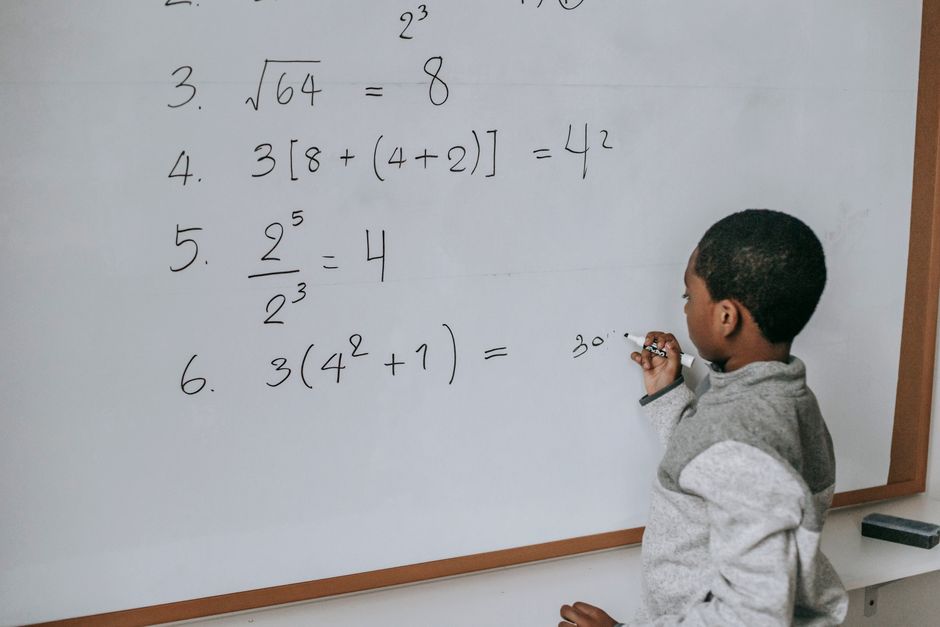
Photo: Kindel Media / Pexels

  1. Registration opensTBA
  2. Registration deadlineNov 42026
  3. Contest datesNov 4 – Nov 172026
  4. ResultsJan 312027

Verified from the official site on September 20, 2026 · comap.org/contests/himcm-midmcm

Organizer
Consortium for Mathematics and Its Applications (COMAP)
Eligibility
HiMCM is open to all students in high school grades or below; the concurrent MidMCM is for middle school students no older than 14.5 on the start date (for 2026, born on or after May 1, 2012). Teams have up to four students and must have a faculty advisor from their school, institution, or program. 2026 marks the 29th HiMCM and the 6th MidMCM.
Format
An online team mathematical modeling contest. The window is 14 days, within which a team chooses its own consecutive working days: download an open-ended modeling problem from the COMAP platform, build and analyze a mathematical model, and write a complete English paper (summary, assumptions, model, solution, validation, conclusions) submitted electronically as a PDF for centralized judging. Resources and software may be used, but the work must be the team's own. There is no fixed exam sitting — only a submission deadline.
Contest dates
November 4, 2026 · November 17, 2026
Fees
The registration fee is $100 per team, payable by credit card only. Registration must be completed by 2:00 p.m. Eastern Time on November 4, 2026; the contest opens at 3:00 p.m. the same day, and submissions are due by 8:00 p.m. Eastern Time on November 17, 2026.
Awards
Award levels, from highest: Outstanding Winner, Finalist, Meritorious, Honorable Mention, and Successful Participant (with Unsuccessful Participant, Disqualified, and Not Judged as non-award outcomes). Results are released on or before January 31, 2027.

About the competition

HiMCM is run by COMAP as a mathematical modeling contest for high school students, alongside MidMCM for middle schoolers. 2026 is the 29th HiMCM and the 6th MidMCM, with a 14-day window from 3:00 p.m. ET on November 4, 2026 to 8:00 p.m. ET on November 17. Registration closes at 2:00 p.m. ET on November 4 and costs $100 per team, credit card only. Results are released on or before January 31, 2027.

Unlike any timed written exam, HiMCM poses an open real-world problem — resource allocation, disease spread, urban planning, an ecological model — with no correct answer. A team of up to four chooses its own consecutive working days inside the window and carries the problem from interpretation through assumptions, model construction, solution, and sensitivity analysis to a complete English paper. That paper must include a Summary Sheet, which judges weigh heavily, along with justified assumptions, the model, results, a discussion of strengths and weaknesses, and conclusions, submitted as a PDF for centralized judging.

Awards run Outstanding Winner, Finalist, Meritorious, Honorable Mention, and Successful Participant. Most teams that work seriously land in the middle tiers, while the top two are scarce and usually turn on originality and writing quality.

A practical note: the window overlaps the November 5 and 13 AMC 10/12 dates, so a student doing both needs a schedule settled in October. The ideal team combines modeling, programming, and English writing.


How to prepare

  • Build the team by complementary skills rather than by math ranking. A good configuration is one person driving the modeling, one handling programming and visualization (Python, MATLAB, or even Excel), one writing the English paper, and one managing schedule and proofreading.
  • The Summary Sheet sets the first impression and judges often read it first. In one page it must state what problem you solved, how, and what you concluded — reserve dedicated time to polish it rather than drafting it in the last hour.
  • Justify every assumption. 'Assume the population is uniformly distributed' is not enough; explain why it is reasonable, how it simplifies the problem, and what bias it may introduce. This is one of the clearest separators between Meritorious and Finalist.
  • Always include sensitivity analysis and a frank discussion of the model's strengths and weaknesses. Acknowledging limitations costs nothing and reads as maturity; dodging them is obvious to judges.
  • Do a three- or four-day dry run on a past problem beforehand and map out a schedule for the real 14-day window — for example two days to understand and model, three to solve and validate, three to write, and one to proofread — so a first-time team does not burn the opening days second-guessing its approach.

Frequently Asked Questions

Should an Irvine student choose the AMC or HiMCM?

They test entirely different abilities. The AMC is a timed written exam rewarding speed and technique, with one right answer. HiMCM is an open-ended modeling project completed inside a 14-day window: turn a real-world problem into a mathematical model, argue from data, and write it up as an English paper with no answer key. They are not mutually exclusive, but HiMCM's November window overlaps the AMC 10/12 dates closely, so doing both needs a schedule planned in advance. Students strong in writing and reasoning but weak under time pressure often fit HiMCM better.

HiMCM has no fixed exam time — so how do the 14 days work?

Once the contest opens, the team downloads the problem from COMAP's platform, works whenever it likes inside the 14-day window, and submits a PDF paper before the deadline. COMAP states explicitly that teams are not required to use all the allotted time; the long window exists so teams can work around school and extracurricular schedules. In practice, build your own timeline — a couple of days to understand and model, several to solve and validate, then dedicated writing and proofreading days — rather than starting at the end.

No teacher to advise our Irvine school's HiMCM team — options?

There are options. A faculty advisor is mandatory, but the advisor can come from a school, another educational institution, or a program — it does not have to be a teacher at your own school. A team has at most four students; one, two, three, or four are all allowed. The advisor registers the team, releases the problem to the students at the start, and verifies that they stop working when the window closes. All substantive work on the paper must still be the students' own — the advisor may not help solve or write.

What are the HiMCM paper requirements and the page limit?

The team submits one English-language PDF of at most 25 pages, containing a one-page Summary Sheet, a recommended table of contents, the body, references, and optional appendices. The report on AI use is appended at the end and does not count toward the 25 pages. The Summary Sheet matters most — judges often read it first, so it has to state on one page what problem you solved, what method you used, and what you concluded. Give it dedicated polishing time.

Can HiMCM teams use ChatGPT or other AI tools?

Yes, if used responsibly and disclosed. COMAP requires teams to append a Report on Use of AI page documenting what they used and how; that page does not count toward the 25-page limit, and COMAP publishes a separate guidance document on large language models in its contests that you should read after registering. Note the other hard rule alongside it: teams may not discuss the contest problem or their work with anyone outside the team, though virtual meetings among team members are fine.

How hard is it for an Irvine student to win a HiMCM award?

The tiers run Outstanding Winner, Finalist, Meritorious, Honorable Mention, and Successful Participant. Based on recent published results, Outstanding is roughly the top 1% of teams, Finalist around the top 5%, Meritorious around the top 15%, and Honorable Mention around the top 25%, with the exact proportions shifting year to year. Recent fields have run near a thousand teams, drawn from several hundred schools across twenty or more countries and regions. For a University of California (UC) applicant, Meritorious or above is a result worth listing under Activities & Awards, and the paper itself is a concrete piece of work to discuss.

What does HiMCM cost an Irvine team, when is the deadline, and when do results come out?

Registration is $100 per team, credit card only. It must be completed by 2:00 PM Eastern on the contest's opening day; the problems are released at 3:00 PM the same day, and submissions are due at 8:00 PM Eastern two weeks later. Results are typically published by the end of the following January. Every time is Eastern, so a California family should convert to Pacific — three hours earlier — and not cut the submission close on local time.

Can Irvine middle schoolers do HiMCM?

Middle schoolers enter MidMCM, which runs alongside HiMCM rather than HiMCM itself. MidMCM's age line is no older than 14 and a half on the contest's opening day, and its format mirrors HiMCM: team modeling, an English paper, the same 14-day window. HiMCM itself is open to students in high school and below, so an exceptionally advanced middle schooler could enter it — but would be competing directly against high school teams.

Train for it with EDUBUSMath Competition Track: Elite Math Track · AMC Accelerator · AIME PathwayThis math competition path for Irvine students runs from grade 3 to high school — Elite Math Track, AMC Accelerator, AIME Pathway — in small in-person EDUBUS classes.Learn More →

Preparing for HiMCM? Start with a 30-minute call

Share the grade and the goal. An Irvine-based course advisor reaches out within one business day with a first, actionable course and study plan. Direction first, courses later.

  • EDUBUS WeChat QR code, WeChat ID EDUBUSer
    Scan to reach a course advisor on WeChatHotline: (949) 383-4877WeChatEDUBUSerCopy the ID and add a course advisor in WeChat

We reply within one business day. Your details are used only for this consultation. By submitting you confirm you have read our privacy policy.