
Computer Science · Elementary / Middle school / High school · US

Bebras Computing ChallengeUSA

Bebras is one of the most widely taken computational thinking activities in the world: free, requiring no preparation, and open from age six, which makes it the ideal zero-cost first look at CS competition for Irvine elementary and middle school families. It will not by itself be a highlight on a college application, but it reveals very early whether a child genuinely enjoys and has aptitude for logic and algorithms, informing whether to commit to the multi-year ACSL and USACO track rather than discovering a mismatch in high school.

Bebras Computing Challenge (USA)
2026-27Latest season

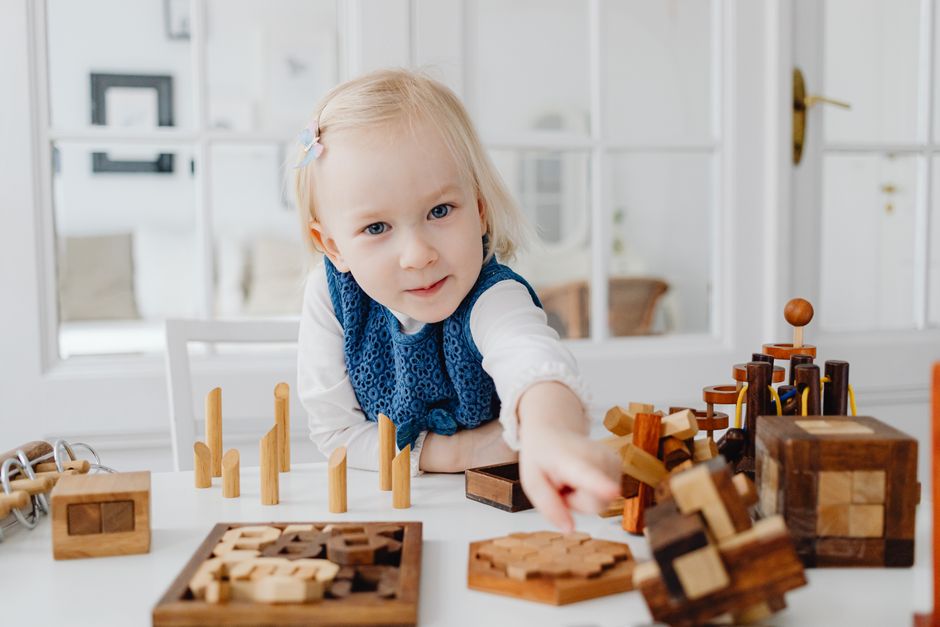
Photo: https://kaboompics.com/ / Pexels

  1. Registration opensTBA
  2. Registration deadlineNov 202026
  3. Contest datesNov 9 – Nov 202026
  4. ResultsTBA

Verified from the official site on September 20, 2026 · bebraschallenge.org

Organizer
USA Bebras Computing Challenge (US national organizer of the international Bebras Challenge)
Eligibility
Open to students aged 6 to 18, split into six age categories: Kits (6-8), Castors (8-10), Benjamins (10-12), Cadets (12-14), Juniors (14-16) and Seniors (16-18). No programming background or advance preparation is required. Students take part through a teacher acting as coordinator, who registers them and schedules the session during the challenge window.
Format
An online timed challenge in which each student has 45 minutes to complete as many tasks as possible. Tasks come in easy, medium and hard tiers tailored to each age category and test computational thinking such as decomposition, pattern recognition, abstraction, algorithm design, logical reasoning and data representation, with essentially no specific programming language involved; many are presented as pictures or short stories. Students are explicitly not expected to finish every task. The challenge runs inside a national challenge window, and the school coordinator schedules and proctors a session within it.
Contest dates
November 9 – 13, 2026 · November 16 – 20, 2026
Fees
Completely free. The official site states that participating in the challenge is free.
Awards
The US site does not publish a national award or prize structure. In practice the school coordinator receives their students' results after the challenge and issues participation or achievement certificates locally. Bebras is designed as a broad-participation computational thinking assessment rather than a selective olympiad; its value is a standardized diagnostic for students and teachers and an entry point to selective contests such as ACSL and USACO.

About the competition

Bebras, Lithuanian for beaver, began in Lithuania and has grown into an international computational thinking challenge taken by millions of students across dozens of countries each year. The US edition is run by the USA Bebras Computing Challenge, and the 2026 challenge week runs from November 9 to 20. Unlike USACO or ACSL, Bebras tests no programming language at all.

Instead it uses carefully designed scenario tasks to probe the thinking behind computer science: decomposing a complex problem, spotting patterns, abstracting a model, designing and describing algorithmic steps, understanding how data is represented and encoded, and reasoning logically and combinatorially.

Tasks are often pictures, animations or short stories, such as routing a beaver, encoding a message or ordering a sequence, so even young children can start intuitively. Each student has 45 minutes to complete as many tasks as they can from an age-appropriate set, across six categories covering ages 6 to 18: Kits, Castors, Benjamins, Cadets, Juniors and Seniors, with easy, medium and hard tiers.

The organizers stress that no preparation is needed and that no one is expected to finish everything. Participation is free, arranged by a teacher who registers as a coordinator and schedules students during the challenge week.

As a pathway, Bebras is the starting point: it identifies children genuinely drawn to logic and algorithms, who then build CS fundamentals through ACSL and move on to algorithmic programming in USACO.

How to prepare

  • No drilling is needed, but do run through official or past sample tasks beforehand so the child is comfortable with how tasks are presented (pictures, stories, drag-and-drop interactions) and does not spend contest time figuring out the interface.
  • Not finishing in 45 minutes is by design. Teach the child to skim every task first, bank the ones they can see immediately, and only then return to the hard ones, rather than burning half the time on the first difficult item.
  • Train careful rule-reading. A Bebras task often hinges on one or two short constraints, and missing one makes the whole answer wrong, so have the child restate the rules before answering during practice.
  • If the school is not running it, approach a math or computer teacher about registering as a coordinator. Participation is free and the teacher only needs to schedule one class period during the challenge week.

Frequently Asked Questions

Can a child in Irvine with zero programming experience take Bebras?

Yes, and that is exactly what Bebras is designed for. No task requires writing code; the challenge tests decomposition, pattern recognition, abstraction, algorithmic thinking and logic, and many tasks are presented as pictures or short stories. Six-to-eight-year-olds in the Kits category work through them directly. Irvine parents do not need to worry about a coding background, and the organizers state plainly that no prior study or preparation is required.

Can a parent register a child for Bebras directly? What about homeschoolers?

Students cannot register themselves. In the US the challenge runs through a coordinator: a teacher applies at bebraschallenge.org, is approved in about one to three business days, then creates student accounts and schedules them. Homeschooling parents can apply as the coordinator themselves — the organizers ask that you give the homeschool a distinctive name, such as Home School plus your initials.

What age can an Irvine child start Bebras?

Bebras is for students aged 6 to 18, split into six categories: Kits (6-8), Castors (8-10), Benjamins (10-12), Cadets (12-14), Juniors (14-16) and Seniors (16-18). Each category gets its own task set with difficulty tuned to that age, and the youngest groups get fewer tasks, so a young child is never working through an older student's paper.

How long is the Bebras Challenge and how many questions are there?

Each student gets 45 minutes — it fits inside one class period. Tasks come in three difficulty sets; most age categories get five tasks per set for fifteen in total, while the two youngest categories get three or four per set. The organizers say explicitly that students are not expected to finish everything, so running out of time is by design, not a failure.

When is the 2026 Bebras challenge week, and does it cost an Irvine student anything?

The 2026 US challenge week runs November 9-20, and a school may schedule its students at any point inside that two-week window. Participation is completely free — the official site states there is no cost to take part. Coordinator applications take a few business days to approve, so it is worth applying well before the window opens rather than during it.

How should a child prepare for Bebras — is practice needed?

No drilling is needed and the organizers say no preparation is expected. Still, it helps to work through the official sample and past tasks once so the child is used to the picture-based and drag-and-drop formats and does not spend contest time decoding the interface. Two habits pay off: skim all tasks first and bank the easy ones, and read the rules carefully — a Bebras task's key constraint is often a single sentence.

Do Irvine parents need Bebras results for college applications?

Directly, not much. Bebras is a broad-participation computational-thinking assessment rather than a selective olympiad, and the US site publishes no national award tiers — results go to the school coordinator, who issues certificates locally. For an Irvine family, its real value is as an early diagnostic that confirms a child's aptitude, before ACSL and USACO build the results that actually carry weight for UC applications.

After Bebras, what competition should an Irvine child move on to?

Let the child's reaction set the pace. If the tasks felt easy and interesting, upper-elementary and middle schoolers can move to ACSL's Elementary or Junior division to build systematic CS fundamentals such as number systems, Boolean algebra and recursion. From middle or high school onward, USACO is the next step, starting in Bronze with Python or C++. EDUBUS is headquartered in Irvine and offers both in-person small classes and synced online sessions for that transition. Bebras confirms the direction; those two are where results accumulate.

Train for it with EDUBUSUSA AI Olympiad SprintAdvanced prep for USAAIO and other top AI competitions, grades 9 to 11, taught in small in-person classes based in Irvine alongside regular coursework.Learn More →

Preparing for Bebras? Start with a 30-minute call

Share the grade and the goal. An Irvine-based course advisor reaches out within one business day with a first, actionable course and study plan. Direction first, courses later.

  • EDUBUS WeChat QR code, WeChat ID EDUBUSer
    Scan to reach a course advisor on WeChatHotline: (949) 383-4877WeChatEDUBUSerCopy the ID and add a course advisor in WeChat

We reply within one business day. Your details are used only for this consultation. By submitting you confirm you have read our privacy policy.